
Jordan Schmid · 2 November 2026
Valley Archives Reveal Connections Between Habitat Changes and Retail Adaptations
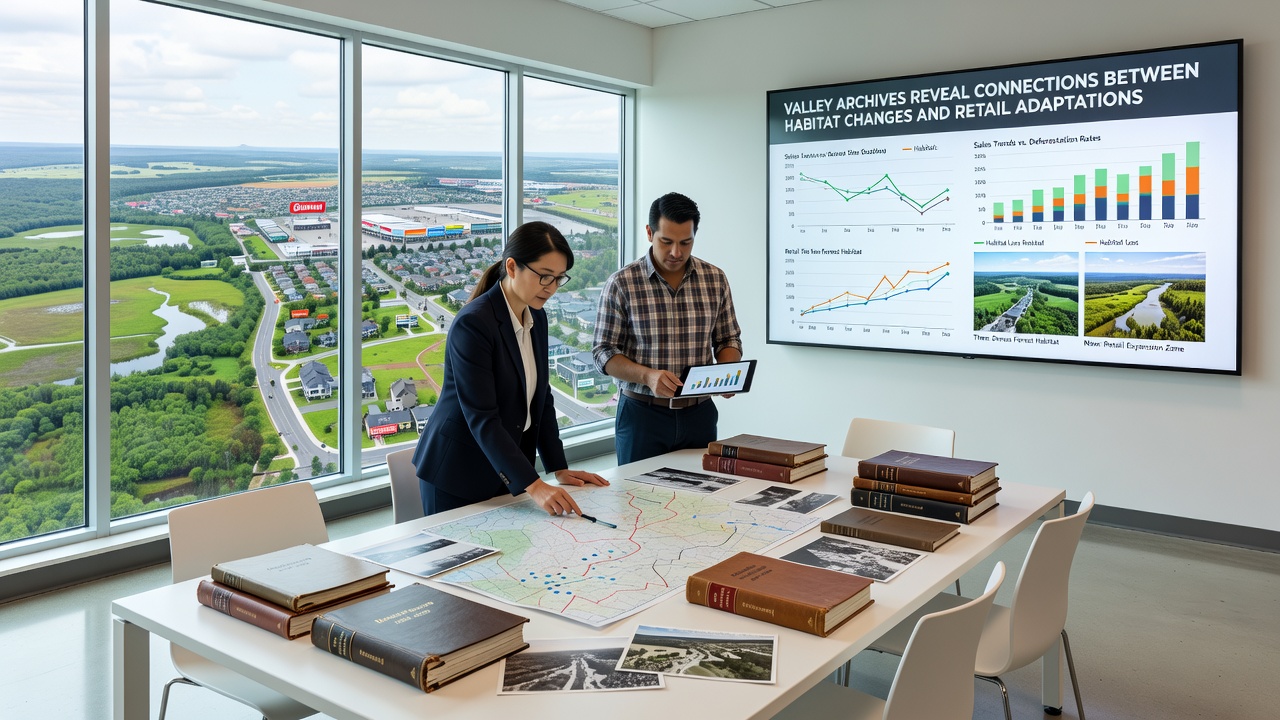
Valley archives have compiled decades of records that link habitat alterations directly to adjustments in retail operations across the region. These collections include land-use surveys, wildlife counts, weather logs, and business ledgers that stretch back to the mid-twentieth century. Researchers accessing the digitized materials have traced how shifts in local ecosystems prompted changes in consumer traffic, product demand, and store layouts.
Habitat Records and Their Reach
Archivists organized the materials into searchable databases that connect environmental metrics with commercial data points. One dataset shows a steady decline in wetland coverage between 1975 and 2015 that coincided with reduced footfall at certain riverside shops. Another set of entries documents rising average temperatures after 2000 and the subsequent increase in demand for cooling products at hardware outlets. The records also note expansions in forested areas that drew more visitors to trailhead stores selling outdoor gear.
November 2026 updates to the archive added satellite imagery and point-of-sale summaries from the previous five years. These additions allow direct comparison between habitat zones and nearby retail zones. Analysts have observed that areas with restored meadows experienced higher weekend sales at adjacent garden centers, while zones affected by prolonged drought saw measurable drops in grocery traffic.
Retail Adjustments Documented in the Files
Business owners referenced in the archives responded to these habitat patterns in several consistent ways. Stores near shrinking woodlands began stocking more imported timber products and indoor furniture lines. Retailers along former farmland corridors introduced seasonal pop-up sections for drought-resistant plants. Several clothing shops adjusted inventory cycles after records showed earlier spring weather correlated with advanced demand for lighter fabrics.
The archives contain ledgers from a cluster of shops that relocated entrances to face newly created green corridors. Sales figures attached to those moves indicate improved daily customer counts once pathways opened. Other entries describe inventory software updates that incorporated habitat monitoring alerts so stock orders could adjust within weeks of observed ecological changes.
Case Examples from the Collections
One set of documents follows a single hardware store that tracked sales against local river flow data over thirty years. When summer flows dropped below historical averages, the store increased orders for water-conservation equipment and recorded corresponding revenue gains. Another file covers a supermarket that used archived bird-migration counts to time promotions for picnic supplies, aligning campaigns with peak visitor periods in restored grassland zones.
Those who have cross-referenced the materials note that transportation records also factor into the patterns. Road construction tied to habitat restoration projects rerouted customer flows, prompting several businesses to add delivery services or adjust opening hours. The archive preserves correspondence between retailers and planners that details these coordinated responses.
Data Sources Informing the Connections
Figures from the Environment and Climate Change Canada reports on regional biodiversity have been integrated into the valley database for comparative analysis. Additional context comes from university studies archived at CSIRO that examine land-cover changes and consumer behavior correlations in similar temperate zones. These external references help validate local observations without replacing the primary valley records.
Ongoing Use of the Archive
Local planning offices now consult the combined datasets when reviewing development proposals. Retail associations have begun incorporating habitat trend summaries into annual reports so members can anticipate inventory needs. The archive continues to receive new entries from both environmental monitors and commercial operators, expanding the record of how ecological conditions and retail practices intersect.
Conclusion
The valley collections demonstrate measurable ties between habitat evolution and retail strategy through preserved documents and quantitative records. Continued updates ensure that future analyses can build on these established connections.