Uma Bennett · 16 November 2026
Valley Education Programs Draw on Archived Records to Navigate Development Pressures and Retail Shifts
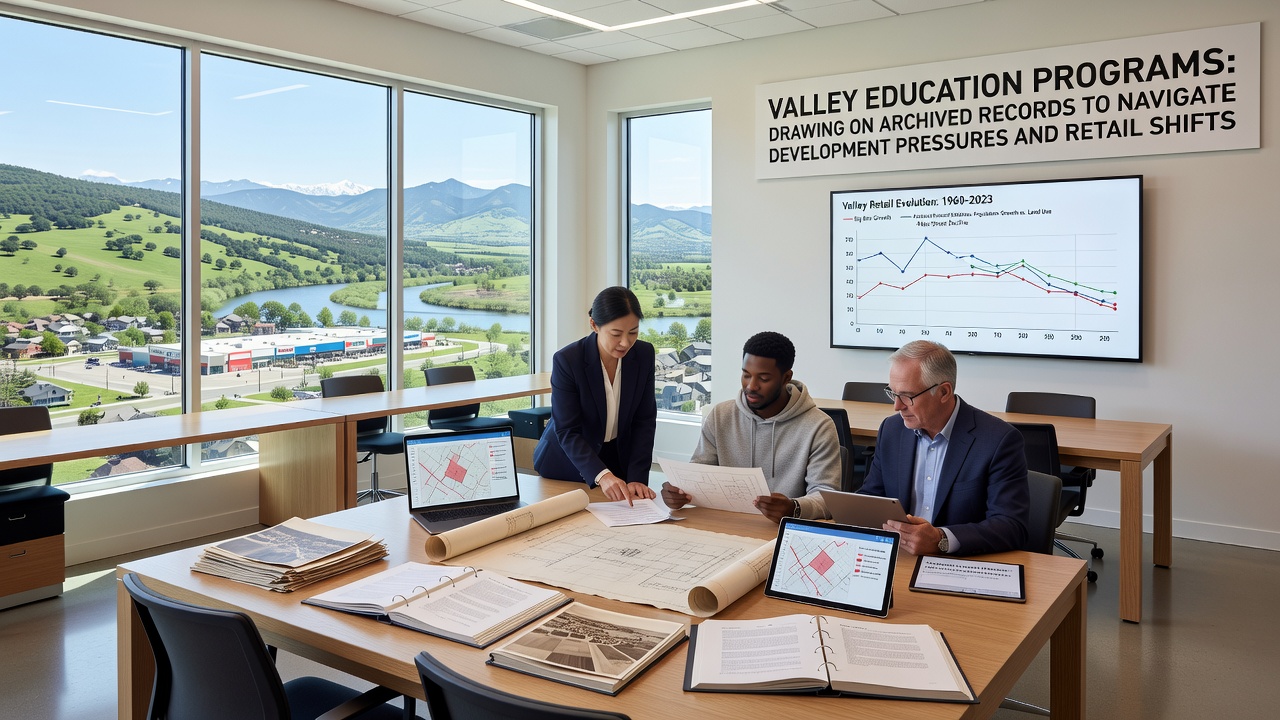
Valley education programs have incorporated archived records into classroom activities and community projects to help address development pressures alongside retail pattern changes, with expanded efforts documented through November 2026. These initiatives draw on decades of local data including land use maps, census figures, and business ledgers that track how retail districts evolved amid earlier infrastructure expansions.
Archived Data Integration in Local Curricula
Schools across the valley region have partnered with archive centers to embed historical datasets into lessons on urban planning and economic geography, where students analyze records showing retail shifts from the 1970s onward. Researchers discovered that digitization projects completed in prior years allowed programs to cross-reference habitat loss data with retail location changes, revealing patterns where commercial zones expanded into former agricultural areas during periods of rapid housing growth. One study from the University of Melbourne on similar regional adaptations demonstrated how such record analysis supports evidence-based decisions in comparable settings.
Teachers report that students examine original planning documents alongside modern satellite imagery, and this comparison highlights how past retail adaptations responded to transportation upgrades. Data from these archives indicate that certain valley corridors saw retail density increase by 40 percent between 1985 and 2005 while green spaces contracted, providing concrete examples for classroom discussions on balancing growth with conservation.
Development Pressures Addressed Through Historical Context
Development proposals in the valley often encounter resistance tied to concerns over habitat fragmentation and commercial displacement, yet education programs use archived records to supply factual baselines for community forums. Observers note that when programs present records of earlier zoning decisions and their outcomes, participants gain clearer views of cumulative impacts. For instance, documents from the 1990s detail how retail centers relocated in response to bypass road construction, and those same files now inform current debates around new housing allocations near existing retail nodes.
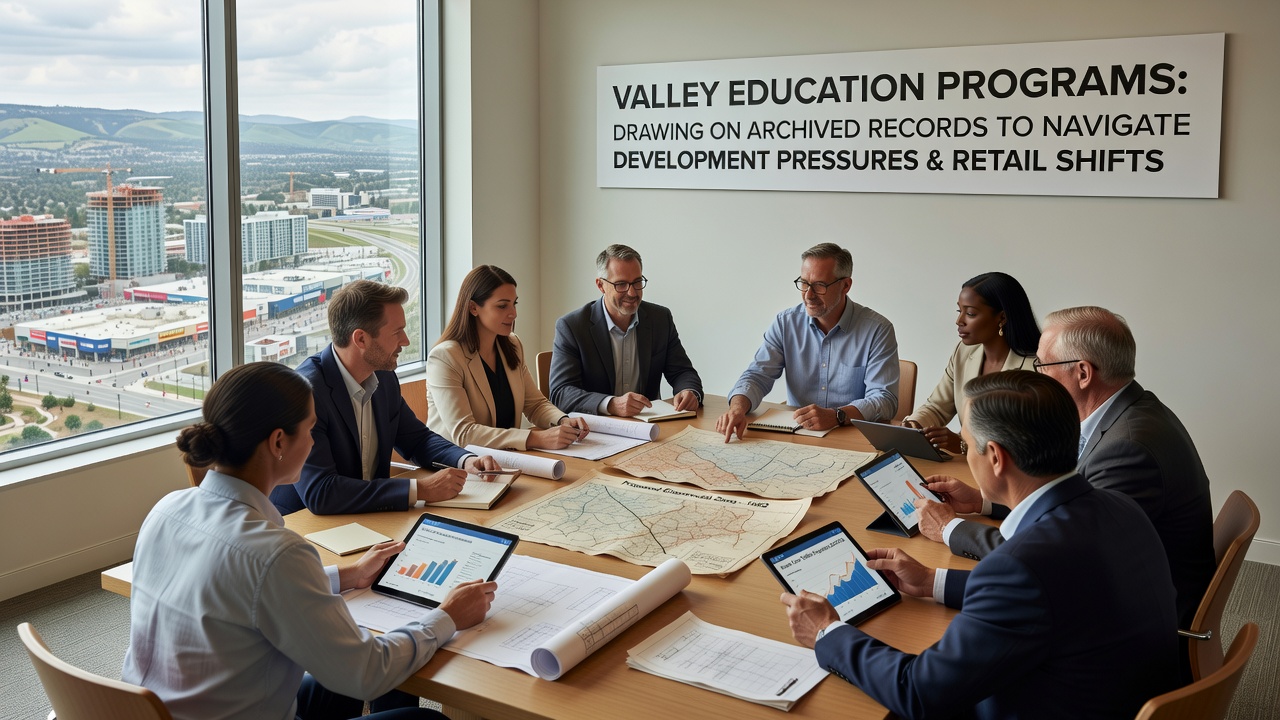
Programs launched additional modules in November 2026 that focus on retail adaptation metrics drawn from archived sales tax records and business registries. These modules connect directly to ongoing infrastructure projects, allowing students to model scenarios based on historical precedents rather than projections alone. Evidence suggests that when educational efforts ground discussions in verifiable past data, local planning sessions incorporate more precise references to previous retail resilience factors.
Retail Shifts and Educational Responses
Retail landscapes in the valley have undergone measurable transitions, including the rise of out-of-town centers and the contraction of high-street outlets, trends tracked through archived chamber of commerce reports. Education programs now guide participants in mapping these shifts against development timelines, revealing correlations between population influxes and changes in shopping district viability. Figures from Environment and Climate Change Canada on parallel regional cases illustrate how archived economic data supports similar analyses elsewhere.
Students participate in projects that overlay historical retail footfall estimates with current traffic studies, and this approach identifies pressure points where development could further alter commercial patterns. Programs emphasize that archived ledgers show specific instances where retailers adjusted inventory and locations following major residential builds in the 2000s, offering templates for anticipating future adjustments without relying on speculation.
Community Outcomes and Record Utilization
Valley residents and local organizations have accessed these education-linked archive resources to prepare submissions for planning reviews, with documented cases where historical habitat and retail data strengthened arguments during public consultations. By November 2026 several schools had established ongoing partnerships that update record sets annually, ensuring curricula reflect the latest digitization efforts. Those involved observe that such continuity allows programs to track incremental retail and development changes over multi-year spans.
Case examples include student-led audits of former retail sites now repurposed for mixed-use developments, with findings presented to council committees alongside original archive excerpts. This process demonstrates how educational use of records translates into practical inputs for navigating competing land-use demands.
Conclusion
Valley education programs continue to expand their reliance on archived records as tools for contextualizing development pressures and retail shifts, building on work completed through November 2026. These efforts supply factual foundations drawn from decades of local documentation, enabling informed engagement with ongoing regional transformations.